
Spain - 34 hours waiting for seven minutes


In search of the Iberian lynx
A very special destination
Some animals you see quite by chance while traveling. For others, you set out deliberately, spend hours waiting, and hope that in the end you'll catch a few precious moments. For me, the Iberian lynx definitely belonged to the second category. My trip to Spain at the end of August 2026 therefore had a clear goal: to photograph the Iberian lynx – and if everything went perfectly, perhaps even a lynx with cubs. I knew it wouldn't be easy.
However, I had underestimated how much patience this journey would actually require from me.
Spain in late summer – beautiful and relentlessly hot
August in Spain.
Even in the early morning, when it's still cold, you can already sense what awaits you later. As soon as the sun climbs higher, the heat becomes merciless. Any decent photography during the day is out of the question. That's why our day starts very early. We set off while it's still dark, so we can be in the hide well before sunrise. The same routine applies in the evening: only when the worst of the heat slowly subsides—it's still 35 degrees Celsius—does the day offer a second chance. The great advantage of this time of year, however, is the light.
And what light!
When everything turns golden
The golden hour in this landscape is fantastic.
The low sun bathes the dry grass in warm shades of gold and ochre. The light filters softly through the bushes, and even the dusty landscape begins to glow. It is precisely in this light that I long to see the lynx. Just to step out of the shadows. To stand still for a few seconds. That is all it takes.
At least theoretically.

Inside the hide – waiting, sweating, hoping
The photography takes place from hides. These are small, sometimes larger, shelters in the middle of the landscape, each with a waterhole in front of it. The animals are not fed. They decide for themselves whether and when they come to the water. This means one thing above all: waiting.
And in the Spanish late summer, waiting also means sweating.
The air in the hide is stagnant. It's hot outside, even hotter and often stuffy inside. Without a fan, it would be unbearable. You sit in your spot, camera in front of you, watching every bush and every movement through the opening.
Wait.
Sweat.
Hope.
And more waiting.
I had imagined it would be easier.
Of course, I knew beforehand that it would be a test of patience.
Nevertheless, I had imagined the whole thing with the lynx would be a little easier.
Perhaps he comes to the water in the morning. Perhaps in the evening. Perhaps he at least walks past the hide once. Reality is different. Hour after hour passes. You hear something in the bushes and are instantly wide awake. A shadow moves – your pulse quickens.
Then it's "just" a bird.
Or a rabbit.
And at some point you start to wonder:
Is anyone even coming today?
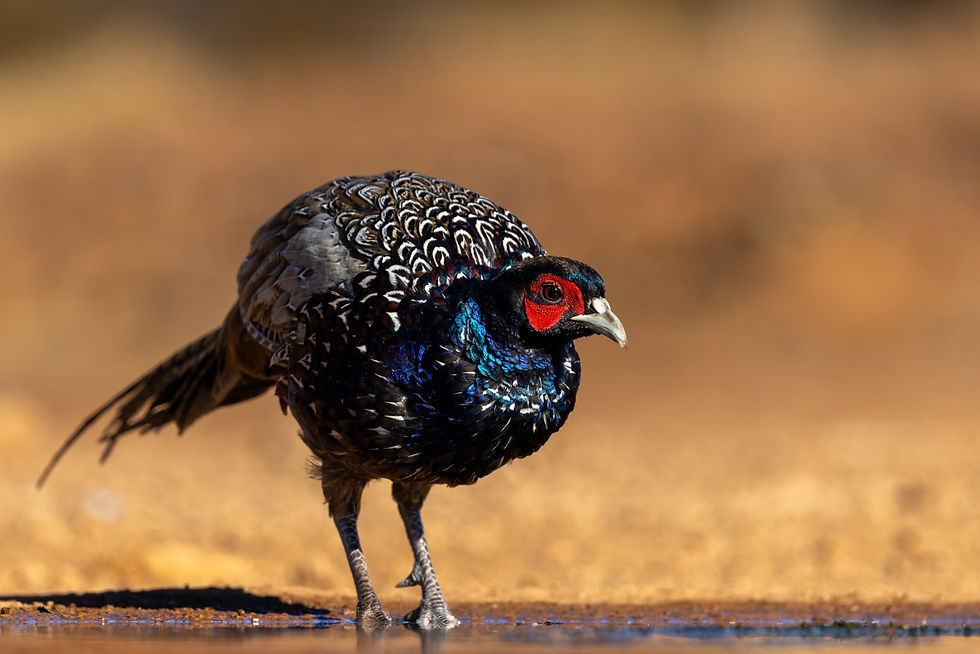
34 hours
In the end, it amounts to roughly 34 hours of waiting . 34 hours in the hide. Observing. Sweating. Waiting. Hoping. And these 34 hours ultimately yield approximately seven minutes of lynx sightings. Three different Iberian lynx. And even those seven minutes are a generous estimate.
One of the sightings lasts about a minute and takes place practically in the dark. Photography is impossible. Only a few minutes remain.
And suddenly everything has to happen very quickly.
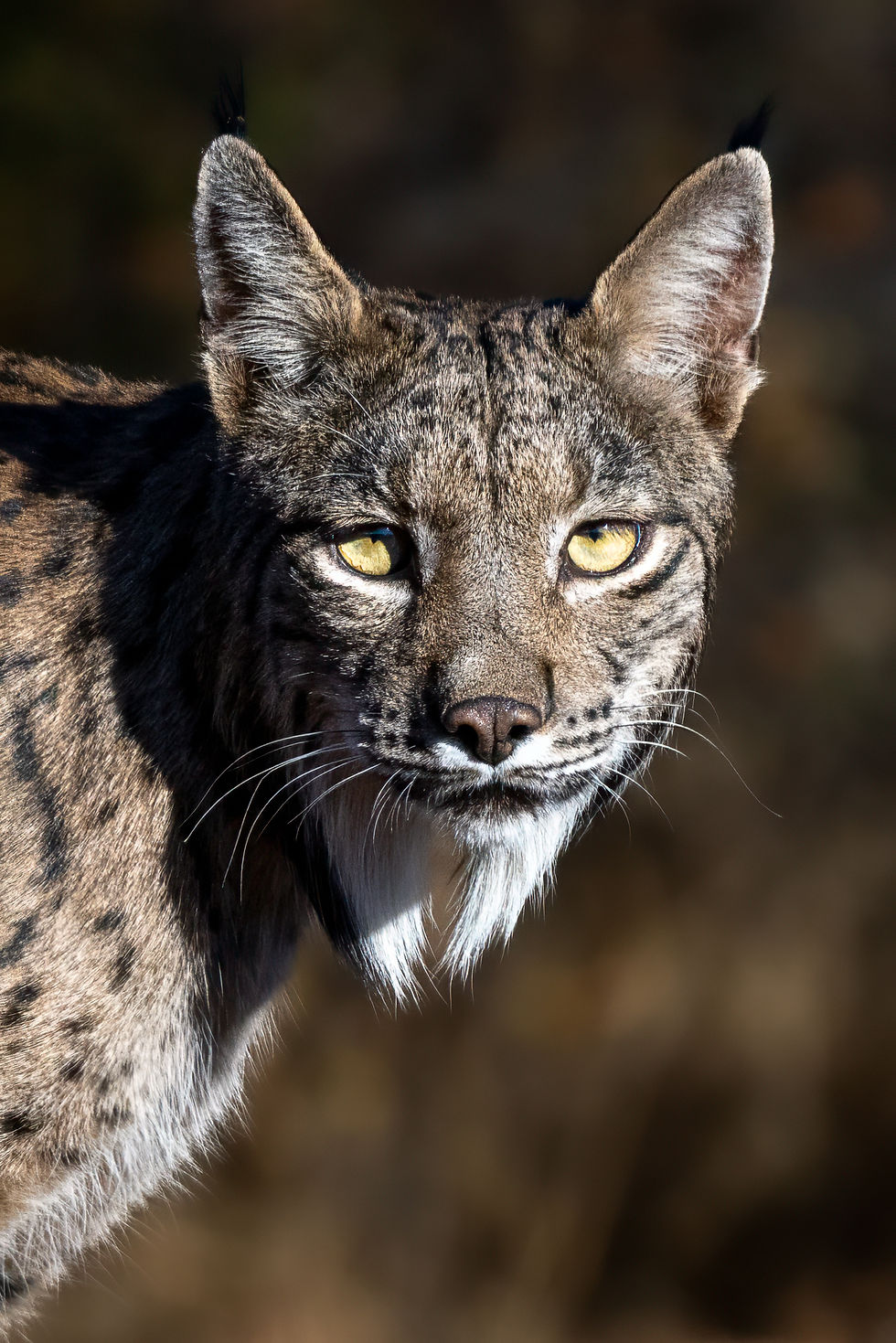
And then he's there
After all these hours, exactly what I've been waiting for happens.
A lynx appears.
No long warning. No leisurely preparation.
Suddenly he's just there.
Raise the camera, focus, frame, exposure – and at the same time try to consciously perceive this moment.
Because I don't know if he'll stay for ten minutes.
Or ten seconds.
The beautiful light, the dry landscape, and this rare lynx fit together perfectly for a brief moment.
Then he disappears again.
Things can change that quickly.
Nothing happens for hours – and suddenly a few seconds decide whether you come home with a photo.

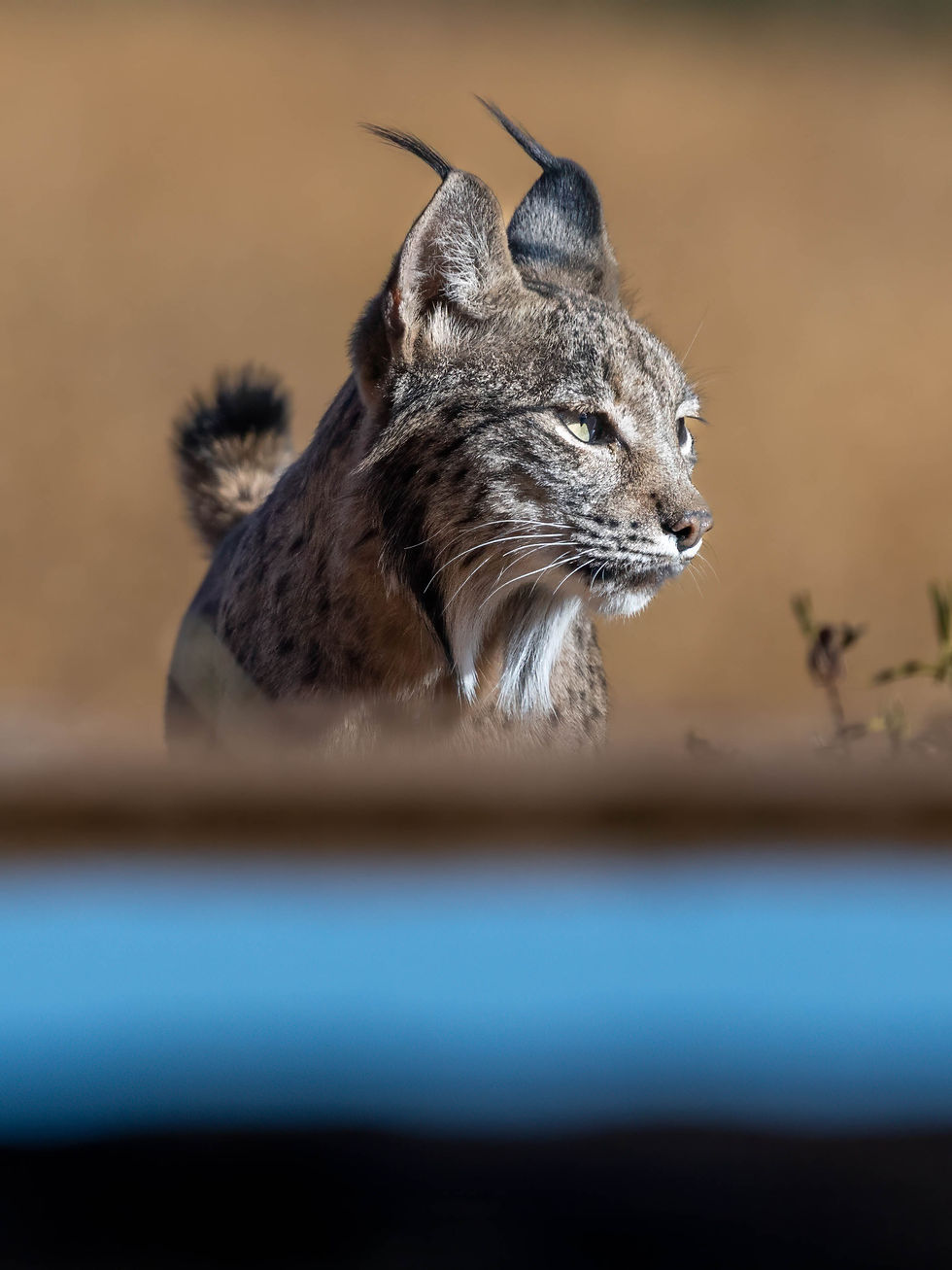
Three lynxes – seven minutes
In total, I see three different Iberian lynxes during the trip.
Seven minutes.
When you compare this number to the 34 hours spent in the hide, it sounds almost absurd.
But that's exactly what wildlife photography is.
There is no guarantee.
The animals are not lured for our benefit. Nobody can say when a lynx will appear, or even if one will come at all.
And perhaps that's precisely what makes those few minutes so valuable.
Because despite everything, some photos are taken that I am very happy with.


The wish that remained unfulfilled
There was one destination I had particularly wanted for this trip.
A lynx with cubs. This encounter, however, should not have happened.
No matter how many hours I waited, the hoped-for situation with the young animals didn't materialize. Naturally, there's a bit of disappointment. But nature photography doesn't work according to a wish list. You can plan, research, get up early, and wait for hours. What happens in the end is decided by nature.
If the lynx doesn't come
Fortunately, an empty space in front of the hide doesn't mean that nothing is happening.
The watering holes attract numerous other animals.
Small birds frequently come to drink and bathe. Pigeons land on the water, and woodpeckers provide occasional entertainment.
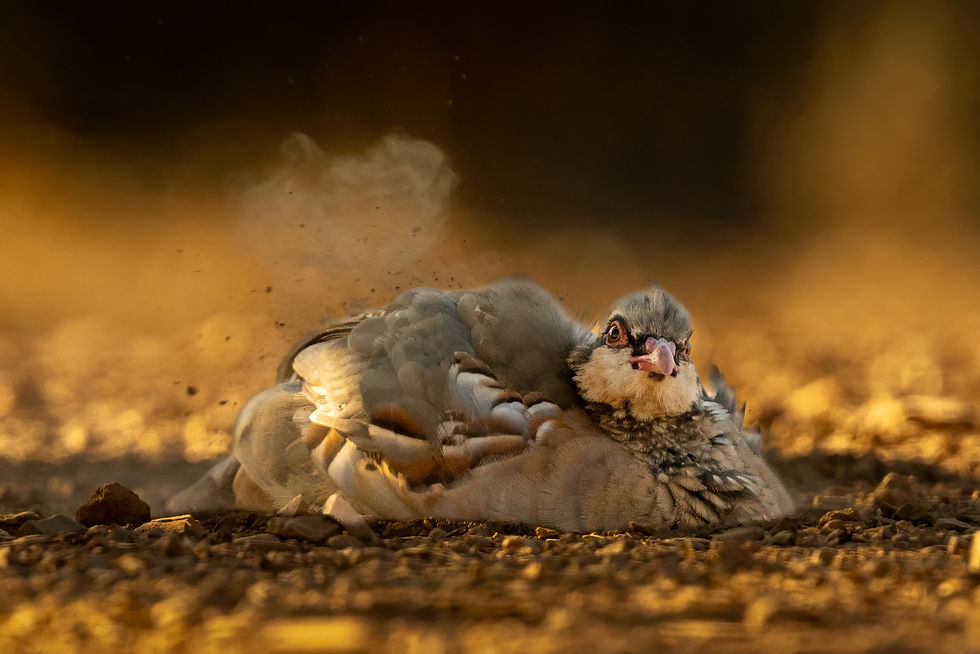
Then the larger visitors arrive. Pheasants and red-legged partridges cautiously emerge from their cover and approach the water. Especially after long periods in which seemingly nothing at all is happening, such encounters are a welcome change. The camera finally has something to do again.


Rabbits – and always the hope
Hares are a particularly common sight. Lots of hares. For me, they make beautiful photographic subjects – for the Iberian lynx, they are primarily one thing: prey.
And that's why every hare suddenly takes on a second meaning. Where there are many hares, the lynx might not be far away. So one's gaze wanders back to the bushes. Perhaps something is moving there. Perhaps it's coming now.
Perhaps.


Our finca – peace and quiet in the middle of nowhere
After the long hours in the hide, we return to our accommodation.
We live in a beautiful finca, far away and surrounded by countryside and tranquility.
After hours of intense concentration, this solitude is exactly what's needed. Putting the camera down, having a drink, looking at the day's photos – and above all, trying to recover from the heat. But there isn't much time.
Because the alarm clock rings early again the next morning. Very early. And hope begins anew.
Was it worth it?
Wait 34 hours.
Seven Minutes Lynx.
A desired design that didn't work out.
And a lot, a lot of heat.
Was it worth it?
Yes.
Because the few moments spent with the lynxes were intense. And some of the resulting photos more than compensate for many hours of waiting and sweating.
But one thing I also know after this trip:
I wouldn't come again in the summer.
The heat makes the long waits extremely tiring. Even with a fan in the hide, every minute eventually becomes tedious.

If I come back, it will be in winter.
The Iberian lynx still haunted me. Perhaps precisely because it made things so difficult. But next time, I would do something fundamentally different. Not August. Not September. In winter. Cooler temperatures, long hours in the hide without slowly melting. This prospect is enticing, even if there certainly won't be any cubs to be seen at this time of year. On the other hand, the days in the hide would probably be considerably more bearable.


Comments